Skip to content
One thoughtful reading, every dayNovember 11, 2026 · UTC edition
Home/Daily topics/Discipline
DAILY DISCIPLINE REFLECTION

Discipline Quote of the Day

A calmer view of habits, patience and sustained effort. Discover today’s featured quote, what it means, and other thoughtfully selected words.

 November 11, 2026 · UTC edition
TODAY’S SELECTION Discipline
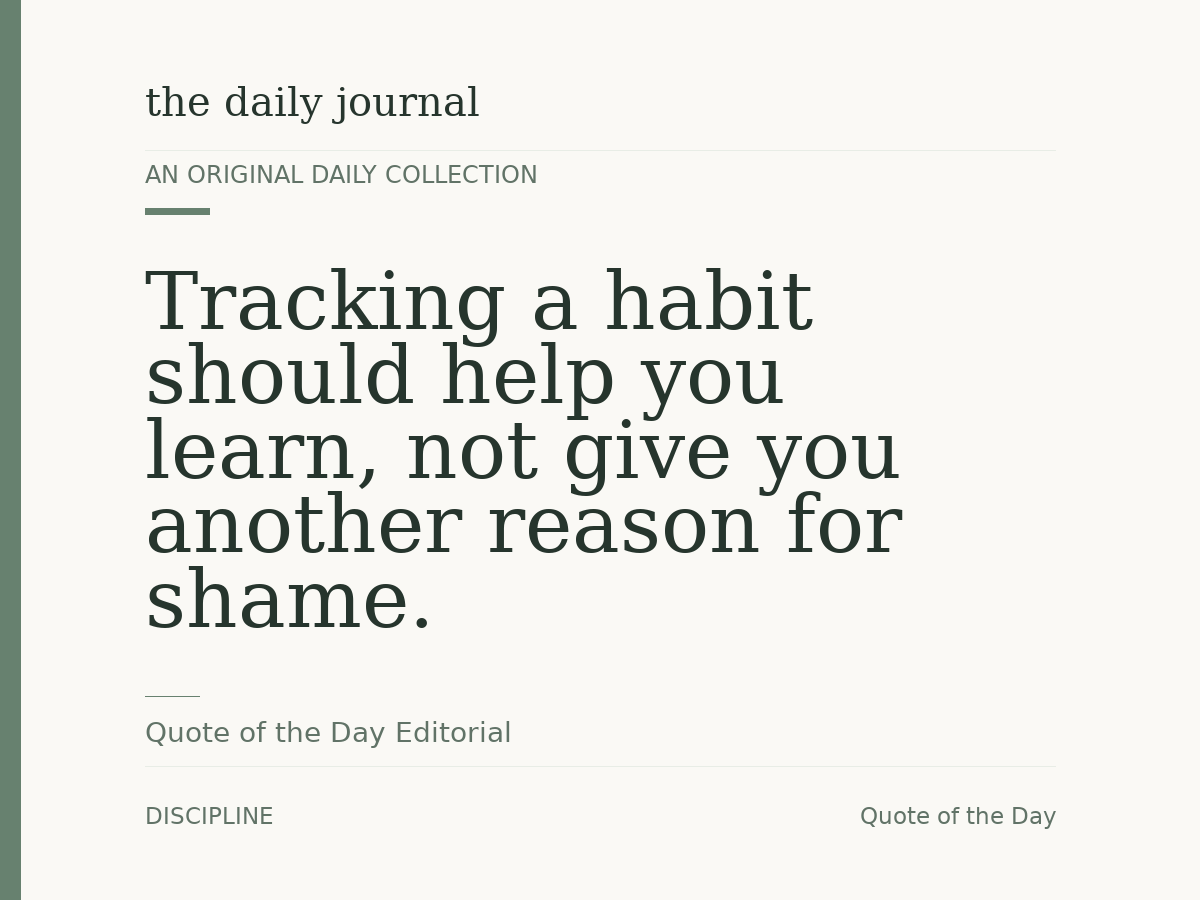
Tracking a habit should help you learn, not give you another reason for shame.

— Quote of the Day Editorial

Download PNG
READ BEYOND THE WORDS

What today’s quote means

Tracking can reveal useful patterns, but numbers alone cannot explain illness, family responsibilities or changing conditions. A good measure invites curiosity before criticism.

KEEP READING

More discipline quotes

Browse other selections from our editorial library, with a little context for each.

Browse the library →
01
“An unglamorous checklist can protect the creative work around it.”

A checklist can hold routine steps so attention is available for decisions that actually require judgment. It should remain editable as new information appears, not become an excuse to ignore context.

02
“Discipline includes knowing when a plan needs repairing instead of more punishment.”

A harsh response to a broken plan may conceal a practical design problem. Reworking the schedule, reducing the load or clarifying the goal can be more responsible than demanding more self-punishment.

03
“An interruption is part of habit formation, not the end of it.”

Interruptions are expected in households, workplaces and learning. Rather than interpreting a break as proof of failure, a person can consider what support would make returning possible.

04
“The habit that survives travel and illness is usually the one you allowed to bend.”

Travel, illness and unpredictable demands may disrupt habits for reasons outside anyone’s control. Flexible versions of a practice can help people maintain the intention without pretending conditions are identical.

05
“The appointment with your goal needs a realistic end time too.”

The end of an appointment protects the time that follows it. Clear stopping points can also make it easier to judge which part of the work is essential and which can wait.

06
“The pencil put back in its drawer makes tomorrow's first step easier.”

Returning a pencil to its drawer is ordinary preparation with a useful purpose: the next person, or your future self, can find it. Small systems deserve attention because they make shared work easier.

THE READING GUIDE · DISCIPLINE

Consistency without punishing yourself

Discipline quotes are helpful when they emphasize repeatable habits, honest commitments, and the ability to return after a missed day. They are less useful when they turn ordinary rest or unpredictable setbacks into moral failures.

How to find the right words

Discipline quotes can support habits and long-term effort without turning missed days into moral failures. Effective consistency depends on realistic routines and the ability to restart.

Choose words that help build a sustainable routine. Ask whether the action can fit a normal weekday, not only the most energetic day of the month.

Consider the meaning, not only the mood

A rigid schedule can stop serving its purpose when circumstances change. Discipline includes adapting while retaining the underlying goal.

WHERE THESE WORDS FIT

Starting a habit

Make the first version small enough to repeat.

After missing a day

Use a quote about returning calmly instead of making up for lost time with an extreme effort.

IN PRACTICE

A way to carry the idea forward

Choose one repeatable behavior and make it easy to begin. Environment, scheduling, and rest often matter as much as willpower.

What habit would survive even my busiest day?

QUESTIONS ANSWERED

How do I use discipline quotes when I keep missing a habit?

Use the quote as a cue to redesign the routine. Make it smaller, adjust the time, and restart at the next opportunity instead of treating a missed day as total failure.

Is discipline the same as motivation?

No. Motivation can rise and fall, while useful habits and systems make action possible during ordinary moods.