Skip to content
One thoughtful reading, every dayNovember 11, 2026 · UTC edition
Home/Daily topics/Leadership
DAILY LEADERSHIP REFLECTION

Leadership Quote of the Day

A daily thought about responsibility, trust and good judgment. Discover today’s featured quote, what it means, and other thoughtfully selected words.

 November 11, 2026 · UTC edition
TODAY’S SELECTION Leadership
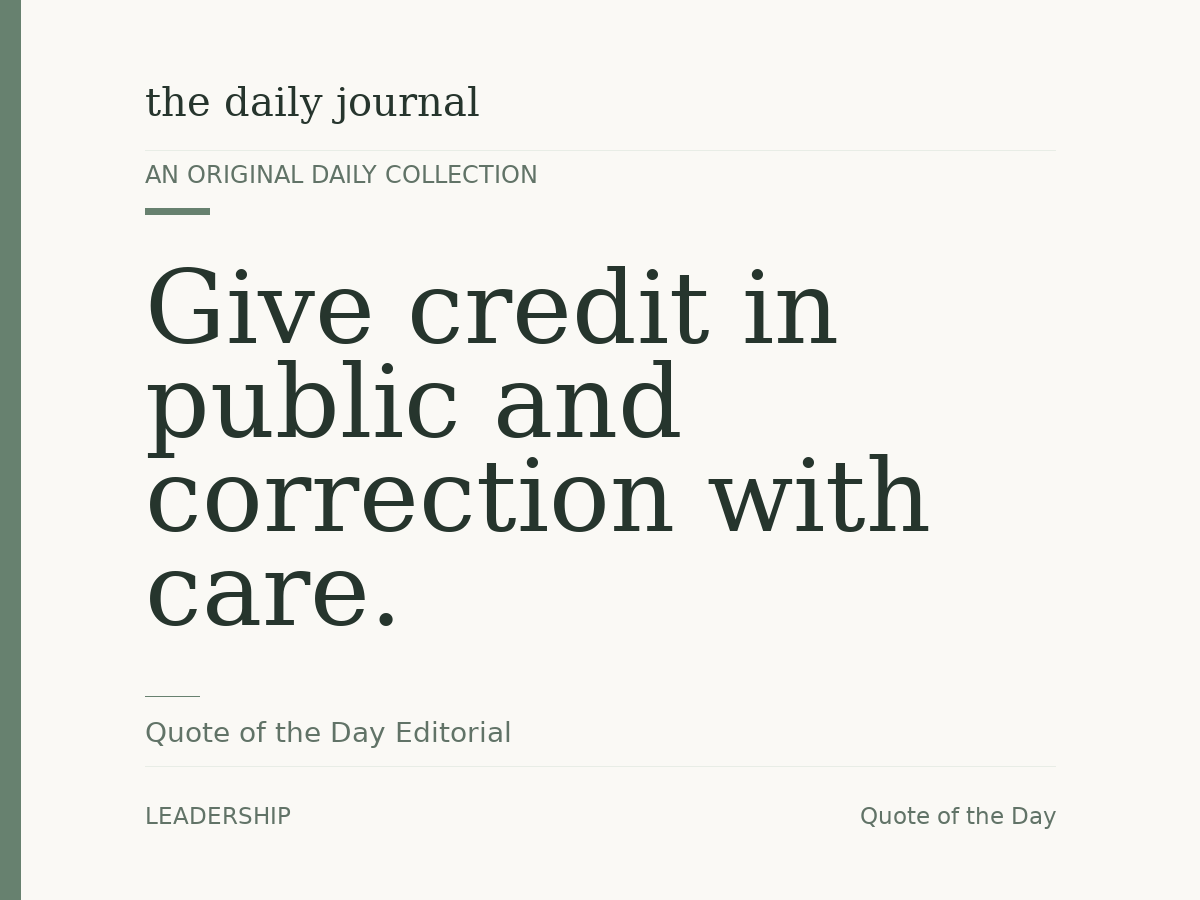
Give credit in public and correction with care.

— Quote of the Day Editorial

Download PNG
READ BEYOND THE WORDS

What today’s quote means

Public recognition names the contribution, while a private correction can address a specific problem without humiliating someone. Privacy is not a substitute for transparency where safety or public harm is involved.

KEEP READING

More leadership quotes

Browse other selections from our editorial library, with a little context for each.

Browse the library →
01
“An apology from a leader is not a loss of authority; it is accountability made visible.”

Acknowledging an error publicly can be a credible use of authority when paired with a concrete correction. Words alone cannot undo the cost of a harmful decision.

02
“The strongest voice in a meeting should make room for the best idea, even when it belongs to someone else.”

A conversation benefits when the ranking of ideas is not simply the ranking of titles. The leader can credit a useful contribution even when it contradicts the original proposal.

03
“An open door is not enough if speaking honestly carries a hidden penalty.”

An open invitation to speak is incomplete if raising concerns results in retaliation or lost opportunities. Trust depends on what happens after someone actually disagrees.

04
“An urgent message should explain what changed, not just demand immediate attention.”

Saying that something is urgent should include the new facts and the reason timing matters. Without that context, every request risks becoming a demand that interrupts other essential work.

05
“A decision is not complete until you have considered who must live with it.”

A decision affects people who were not in the room. Considering those consequences before approval can surface trade-offs and reduce the chance that costs are silently pushed onto others.

06
“Who gets credit after the deadline tells a story about the team before it.”

Awards and acknowledgments can reveal whether visible presenters absorb credit earned by people behind the work. Good recognition follows contribution rather than proximity to power.

THE READING GUIDE · LEADERSHIP

Leadership is visible in other people's work

Leadership quotations should help examine responsibility, communication, fairness, and the decisions that affect a team. An inspiring slogan is less valuable than a question about what people need in order to do good work.

How to find the right words

Leadership quotes work best when they point toward concrete responsibilities: listening, clarity, accountability, fair credit, and good decisions under uncertainty.

Look for lines that encourage listening, clear expectations, honest feedback, and credit for contributions. Avoid treating charisma as a substitute for sound judgment.

Consider the meaning, not only the mood

Beware of advice that portrays leaders as always decisive and employees as interchangeable. Good leadership adapts to context and expertise.

WHERE THESE WORDS FIT

Before delegating

Clarify the outcome and give the person enough information to decide how to work.

After a setback

Ask what the process or leadership decision could improve, not simply who to blame.

IN PRACTICE

A way to carry the idea forward

Apply the quote to an actual team interaction. You might clarify ownership, invite feedback, acknowledge a contribution, or revisit a mistaken assumption.

What would make the next decision clearer for my team?

QUESTIONS ANSWERED

What makes a leadership quote useful at work?

It should describe a behavior others can recognize, not simply praise authority. Pairing it with a real team practice gives it value.

How can managers use a daily leadership quote?

Use it to start a practical discussion about trust, communication, or responsibility, then follow through.