“Power is most revealing when someone uses it to make a fair process easier.”
Rules and decision processes affect whether authority can be exercised fairly. The quotation values usable procedures rather than mere displays of status.
Powerful daily quotes about courage, thoughtful decisions, integrity and influence without clichés. Discover today’s featured quote, what it means, and other thoughtfully selected words.
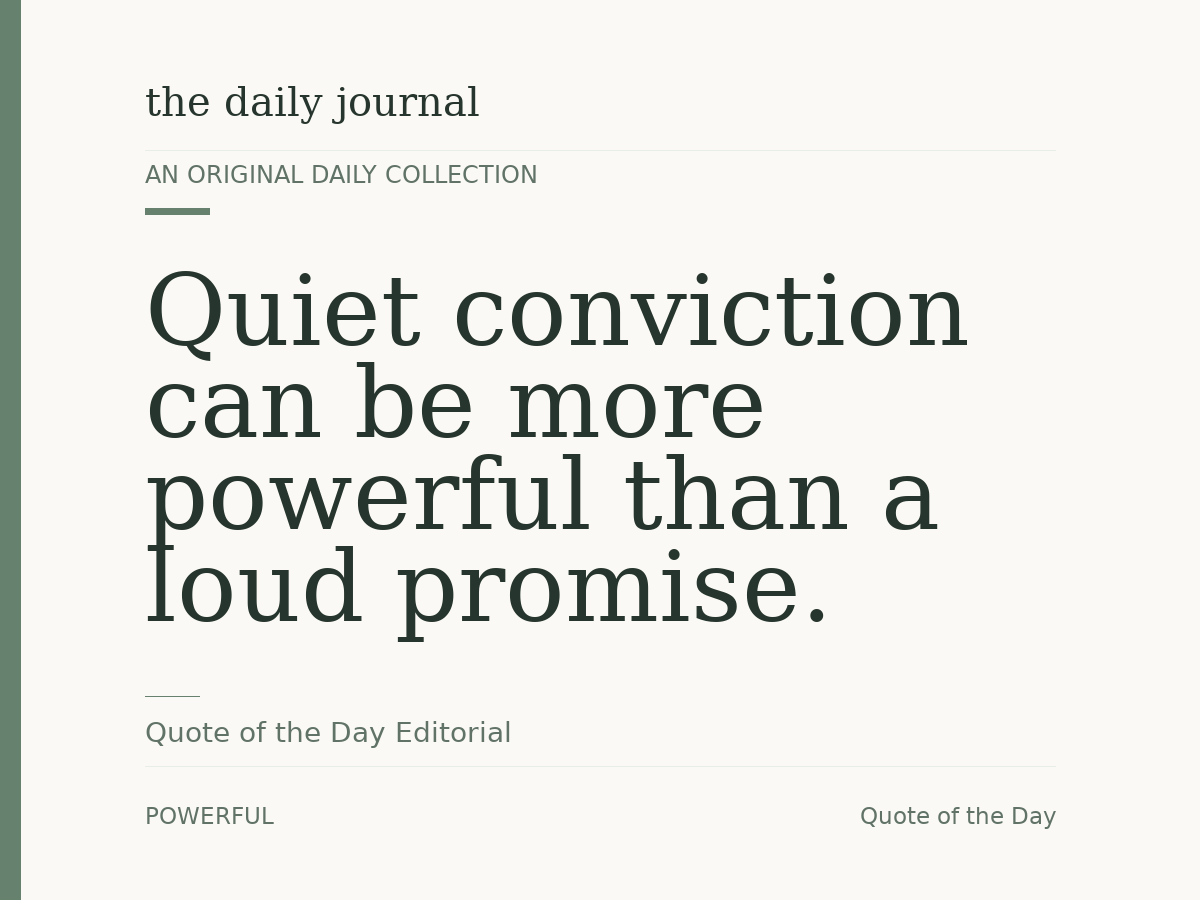
Quiet conviction can be more powerful than a loud promise.
— Quote of the Day Editorial
Conviction becomes meaningful when choices remain consistent beyond a speech. The contrast is between a dramatic promise and conduct others can observe.
Browse other selections from our editorial library, with a little context for each.
“Power is most revealing when someone uses it to make a fair process easier.”
Rules and decision processes affect whether authority can be exercised fairly. The quotation values usable procedures rather than mere displays of status.
“The strongest person in the room may be the one who can say I need more evidence.”
Admitting a need for more information can interrupt pressure toward false certainty. This quotation treats evidence seeking as strength, not embarrassment.
“A powerful choice is sometimes the refusal to make someone else feel powerless.”
A person with influence can decide not to exploit another person’s dependence. The line views the protection of agency as an important test of how power is used.
“Power is easier to admire than restraint; restraint is harder to practice.”
Restraint is often less visible than public authority or force. The quotation asks readers to notice discipline that prevents a dispute from becoming a contest.
“An honest limit can carry more authority than an impossible promise.”
Credible confidence includes stating what is not known or cannot be delivered. The line treats honest limits as more useful than impossible assurances.
“Real strength can hear a refusal without turning it into a contest.”
Hearing no without retaliation shows that another person retains a choice. The quotation treats consent and boundaries as limits on personal influence.
A quote feels powerful when its language is memorable and its idea withstands scrutiny. Directness alone is not depth: a brief statement about courage, integrity, or responsibility should offer a distinction worth thinking about.
Powerful quotes do not have to sound forceful. The most memorable lines may focus on quiet courage, accountability, a clear boundary or a difficult truth said respectfully.
Look for sentences that remain useful beyond their dramatic typography. Ask what they actually encourage and whether you agree with the implication.
Avoid sweeping claims that sound strong but dismiss nuance, empathy, or consequences.
Choose a line that clarifies a value or responsibility.
Use a quote sparingly and explain why it belongs in that context.
Consider a situation that needs better judgment rather than louder certainty. Choose one honest statement that could improve it.
Where would a calm, direct response have more impact than a dramatic one?
Clarity and specificity. A line that expresses a recognizable truth without exaggeration often stays with a reader longer than a grand claim.
Explain its meaning in ordinary language. If there is no clear idea beneath the phrasing, choose another.