Work ↗“A respectful disagreement can prevent an expensive agreement.”
Quote of the Day EditorialA carefully explained concern may save a team from committing to a flawed plan. Challenging an idea works best when the issue is specific and the people involved are treated with dignity. Before a delivery plan is approved, a dispatcher questions a proposed route using an updated access notice and offers a workable alternative.
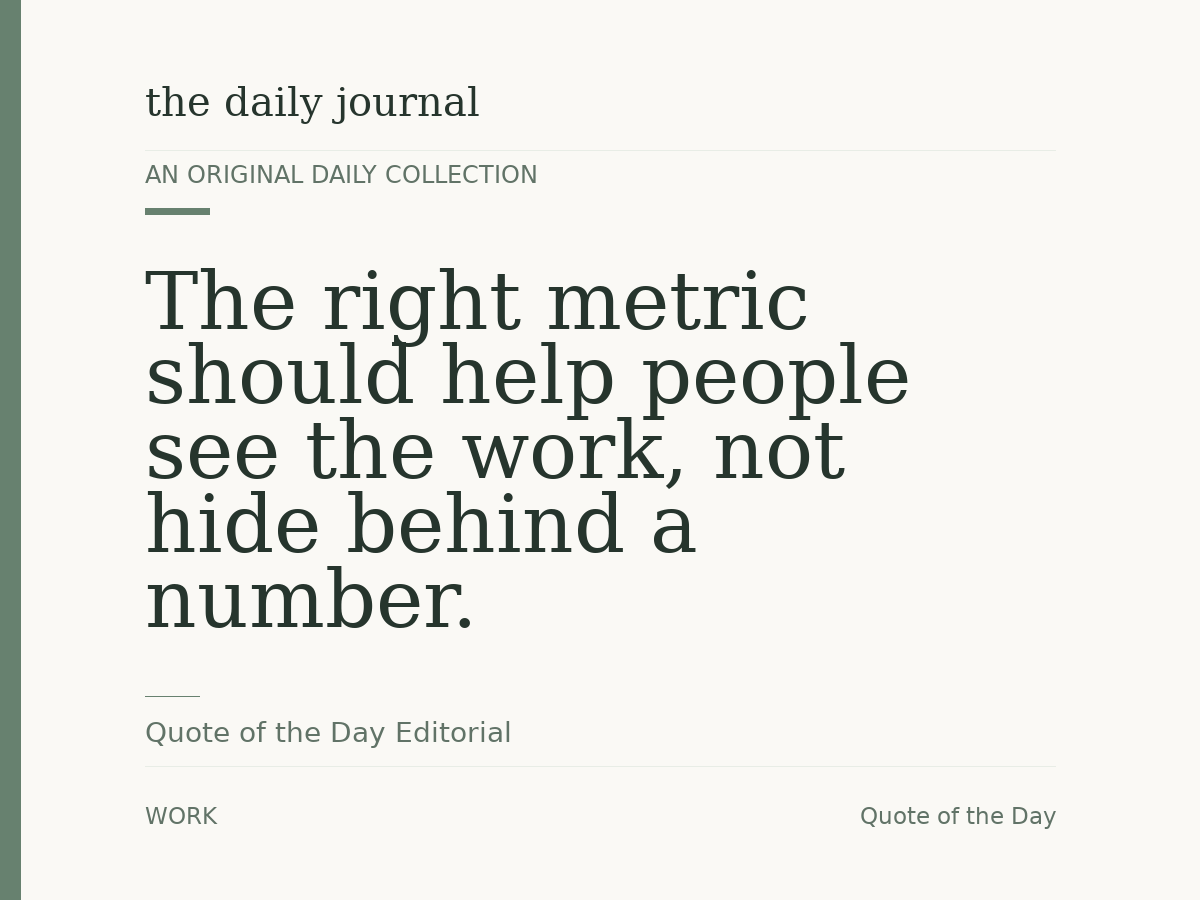
Work ↗“The right metric should help people see the work, not hide behind a number.”
Quote of the Day EditorialMeasures can illuminate progress, but they also leave parts of a job uncounted. Sound judgment asks what a metric misses before turning it into the whole definition of success. A customer-support team celebrates shorter average calls. A review of follow-up requests shows that some callers must contact the team twice to solve the same issue. Managers add first-contact resolution and accessibility feedback rather than rewarding speed alone.
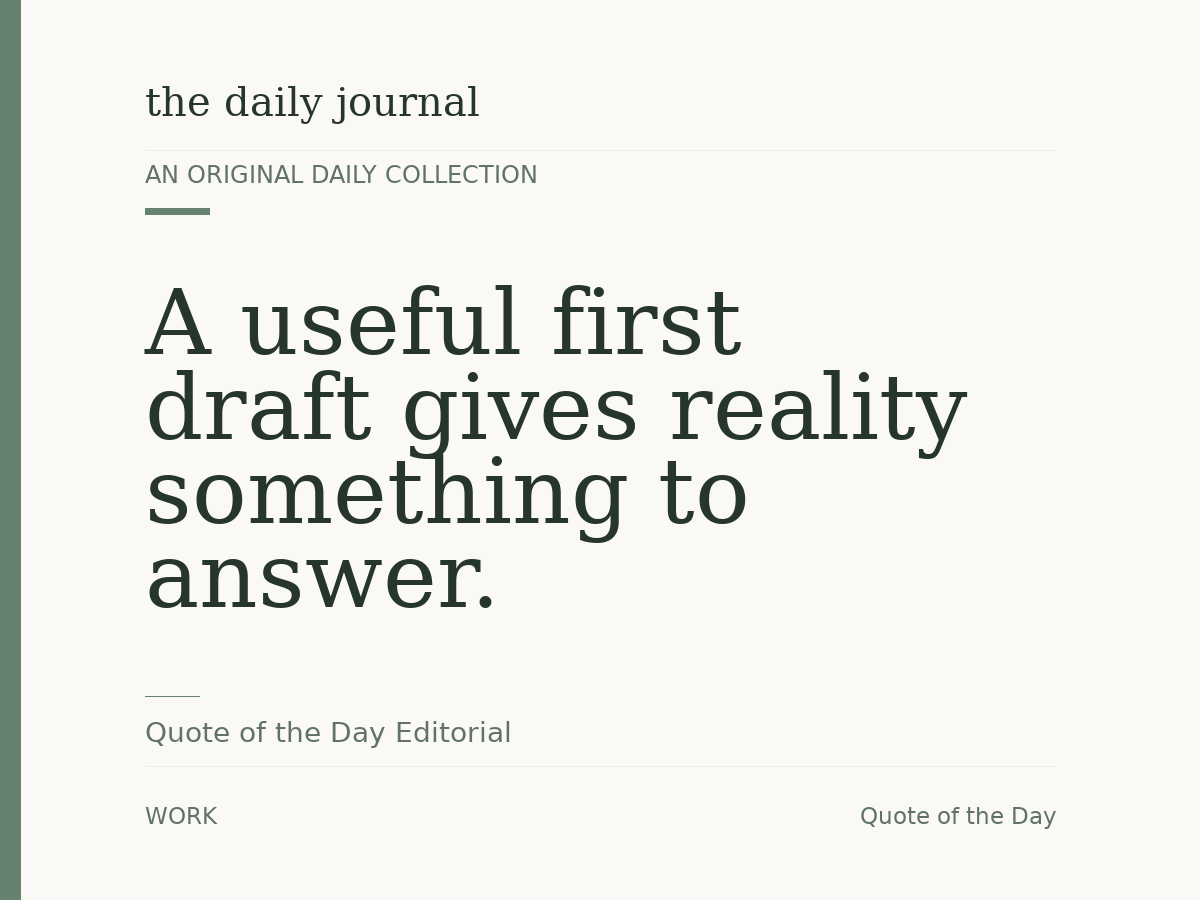
Work ↗“A useful first draft gives reality something to answer.”
Quote of the Day EditorialAn early version makes assumptions visible and invites concrete feedback. The point is not to rush unsafe work into use, but to learn before investing in an elaborate wrong direction. A community center tests a rough registration form with staff before printing hundreds of copies, discovering that two questions are confusing in practice.
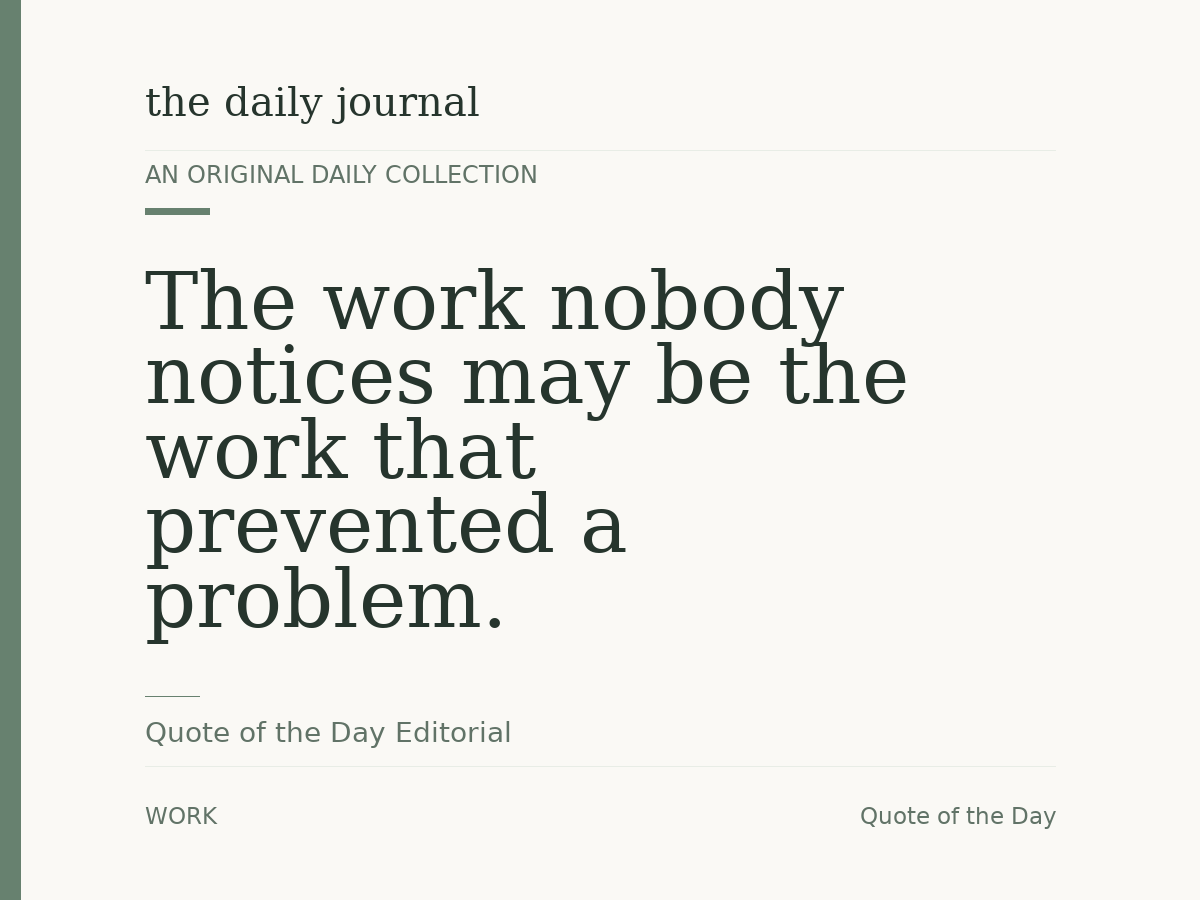
Work ↗“The work nobody notices may be the work that prevented a problem.”
Quote of the Day EditorialMaintenance, quality checks, and quiet preparation often become invisible when they succeed. Their value deserves recognition even when there is no dramatic moment to report. At a community food cooperative, a technician checks refrigerator alarms before a holiday closure. No breakdown occurs, and the manager records the preventive work rather than treating the uneventful weekend as proof that no effort was needed.
Work ↗“A workplace learns faster when a mistake becomes a question before it becomes a secret.”
Quote of the Day EditorialPeople are more likely to correct a problem when they can raise it without humiliation. Openness does not remove accountability; it helps the team understand causes and prevent repeat harm. A warehouse team discovers that two similar shipping labels are regularly confused. Instead of quietly relabeling parcels after complaints, a worker flags the pattern. The supervisor tests clearer label placement and adds a second check for time-sensitive orders, then shares what changed with the team.
Bible ↗“And be kind to one another, tender hearted, forgiving each other, just as God also in Christ forgave you.”
Ephesians 4:32Paul places kindness and forgiveness beside warnings against speech that harms a community. The verse does not ask readers to deny harm or abandon wise boundaries. After a volunteer speaks sharply during a meeting, a colleague explains the effect of the remark without humiliating them. The volunteer takes responsibility, apologizes and changes how future disagreements are handled. Others leave room for repair while maintaining the group's shared expectations.
Bible ↗“As you would like people to do to you, do exactly so to them.”
Luke 6:31In Jesus' teaching about kindness toward opponents and generosity, this sentence asks listeners to consider others' good through their own experience of dignity. A club organizer remembers how confusing an unfamiliar venue can feel and sends visitors clear transport, entrance and access details. Rather than assuming everyone has identical needs, the organizer asks whether further information would help.
Bible ↗“Come to me, all you who labor and are heavily burdened, and I will give you rest.”
Matthew 11:28Jesus invites burdened listeners to come to him. The next verses explain this rest through his teaching and gentle way, so the promise is best read in that context. Someone exhausted by family responsibilities reads Matthew 11:28–30 in a quiet moment, names the pressure honestly in prayer, and then asks a trusted person for help with one task. The spiritual response and practical support can coexist instead of competing.
Bible ↗“Bear one another’s burdens, and so fulfill the law of Christ.”
Galatians 6:2This line follows a call to restore people gently. Carrying another's burden means sharing real difficulties, while the surrounding passage also addresses personal responsibility. A community member returning after an injury needs help reaching a weekly gathering. Volunteers ask what support would be useful, arrange a temporary lift schedule with consent, and revisit the plan rather than assuming that one unpaid helper should do it indefinitely.
Bible ↗“Rejoice with those who rejoice. Weep with those who weep.”
Romans 12:15In a chapter about sincere love and shared life, Paul places celebration and grief side by side. The invitation is to meet others honestly in their circumstances. A colleague receives good news while another is facing a difficult family week. Their team congratulates the first person without asking everyone to feel cheerful, and offers practical cover to the second without insisting on personal details. Each response fits the person and the moment rather than a single required office mood.
Bible ↗“But be doers of the word, and not only hearers, deluding your own selves.”
James 1:22James contrasts merely hearing instruction with practicing it. The surrounding passage uses the image of a person forgetting their reflection to describe knowledge without lived response. A volunteer group discusses welcoming visitors who have trouble reading its signs. After listening, members test a clearer entrance notice, ask a visitor to check it and make an improvement. The point is not how much the group talked about welcome, but whether its next encounter became easier for someone else.
Bible ↗“A friend loves at all times; and a brother is born for adversity.”
Proverbs 17:17The proverb values loyalty when circumstances are hard, not only pleasant companionship. Its parallel lines connect friendship and family responsibility without suggesting that every relationship is safe. A friend misses several gatherings while caring for a relative. Instead of treating the absence as rejection, another friend checks in privately and offers a practical errand, while accepting that help may be declined. Loyalty appears in respectful attention, not a demand for updates.
Bible ↗“A gentle answer turns away wrath, but a harsh word stirs up anger.”
Proverbs 15:1The proverb contrasts two ways speech can shape a tense encounter. A gentle answer may lower the temperature without requiring a person to excuse mistreatment. Two relatives disagree about a family arrangement. One notices that the conversation is becoming personal and says, 'I disagree with that plan, but I want to hear why it matters to you.' The disagreement remains, yet both have a better chance of discussing the actual decision rather than defending themselves against an insult.
Friendship ↗“A good friend does not turn your private struggle into their public kindness.”
Quote of the Day EditorialHelping someone does not entitle us to broadcast their vulnerability. Discretion protects dignity and lets the person receiving care decide which parts of their story are shared. After giving a friend practical help during a difficult week, someone is tempted to post a grateful message describing the situation. They instead send a private check-in and ask whether any part of the news is the friend's to share publicly.
Friendship ↗“You can tell a friend that a joke hurt without ending the laughter between you.”
Quote of the Day EditorialHumor sometimes misses its mark. Saying so respectfully can help both people adjust without forcing anyone to choose between silence and the whole relationship. After a teasing remark at dinner, a friend explains privately why it stung, and the other person adjusts future jokes while keeping their shared humor.
Friendship ↗“A forgotten birthday may call for an apology, not a verdict on an entire friendship.”
Quote of the Day EditorialMissing an occasion may be painful, and acknowledging it matters. The line distinguishes a repairable oversight from a judgment about every year of care that came before it. After missing a friend's birthday, someone calls to apologize without excuses and suggests a quieter celebration if their friend wants one.
Friendship ↗“Some friends teach you a city through places no guidebook would mention.”
Quote of the Day EditorialThe corner shop, bus stop or side street shared with someone can take on personal meaning. A place can become part of a friendship’s history because of what happened there. A friend visiting a new city is shown a tiny bookshop and an ordinary bench where years of conversations took place, places that become memorable through the shared story.
Friendship ↗“The best friendships are not scoreboards, but both people still need room to give.”
Quote of the Day EditorialKeeping a ledger of favors can drain affection, yet one-sided expectations can also hurt. Mutuality means noticing capacity and effort over time without demanding a perfectly even exchange every day. Two friends realize that regular errands have fallen to only one of them, so they discuss what each can reasonably offer without counting every favor.